
תוכן עניינים
- Appointment of Experts in Tort Claims and the Path to Full Professional Representation
- A New and Liberal Approach to the Appointment of Experts
- Prima Facie Evidence is Sufficient
- The Consequences of Refusing the Plaintiff's Position
- Who Bears the Costs of Expert Fees?
- How We Apply These Principles in Practice
- Frequently Asked Questions
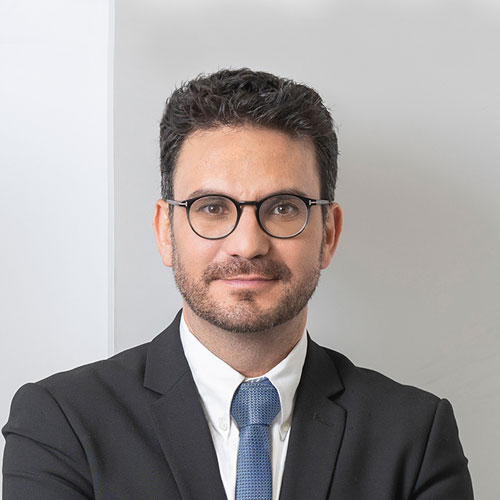
By: Attorney Moshe Taieb
Appointment of Experts in Tort Claims and the Path to Full Professional Representation
At our firm, we frequently encounter questions regarding the appointment of experts in tort claims, particularly in road accident cases. A significant Supreme Court ruling from 2012 (CA 3007/12) established principles that have greatly influenced the rights of road accident victims to receive comprehensive and accurate medical evaluations.
The case involved a woman who was injured in a road accident on June 22, 2009, when a vehicle struck her from behind. The district court appointed only a neurology expert and rejected her request to appoint additional experts in other medical fields. The ruling fundamentally changed the prevailing approach on this matter.
A New and Liberal Approach to the Appointment of Experts
Justice Zilbertal established a fundamental principle: “The basic principle in tort litigation under the Compensation Act is that since the injured plaintiff cannot prove their medical condition except through a court-appointed expert, the court must keep the door open before them.”
We view this principle as a significant change in the judicial approach. In the past, courts were very cautious about appointing experts, tending to dismiss such requests as frivolous. The new understanding is based on the recognition that an injured party has the right to a comprehensive examination of their medical condition, and that preventing this could cause irreversible harm.
Prima Facie Evidence is Sufficient
The Supreme Court declared that “prima facie evidence should be used broadly and liberally. Prima facie evidence suffices to establish a plausible connection and causal link. In cases of any doubt, an expert should be appointed.” This approach represents a significant departure from prior requirements for full proof or strong proof of causation.
In our daily work, we implement this principle in practice: we submit detailed requests for the appointment of experts while presenting prima facie evidence demonstrating the connection between the accident and the claimed injuries. We ensure to bring before the court all relevant medical evidence, even when it is still partial or in early stages.
The Consequences of Refusing the Plaintiff’s Position
The court clearly stated that “refusing a request to appoint an expert can easily dismiss the entire claim.” This determination underscores the significance of not arbitrarily refusing such requests without proper justification. The plaintiff was injured in an accident and appeared before the court in order to receive a professional assessment of their condition.
We see in this decision an important recognition of the situation in which the plaintiff finds themselves. They cannot use their own experts, but rather depend on the discretion of experts appointed by the court. Without appropriate experts, they cannot prove their damage and receive the compensation they deserve.
Who Bears the Costs of Expert Fees?
The court also addressed the question of who should bear the costs of expert fees. It established that “the accepted practice is that the insurer-defendant bears the costs of experts’ fees from practical and principled perspectives.” The rationale for this decision stems from the recognition that an injured party should not be required to pay heavy fees from their own pocket in order to prove their right to compensation. At our firm, we ensure that the court is made aware of the precedents established regarding payment, and that the financial burden does not fall on our clients.
How We Apply These Principles in Practice
Since this ruling, we have been advising our clients to act in accordance with the new guidelines. When there is suspicion of injury or harm resulting from a road accident, it is worth submitting a request for an expert appointment even when the findings are not yet complete. Prima facie evidence, presented alongside a plausible connection and a reasonable causal link between the accident and the claimed injury, is sufficient.
We prepare detailed requests that include all available medical material, a specific description of the accident, and a precise description of the plaintiff’s complaints and coping mechanisms. When any doubt arises, we bring before the court the principle established already in 2012: in cases of doubt, an expert should be appointed.
Frequently Asked Questions
At what stage should a request to appoint an expert be submitted?
According to the ruling, prima facie evidence is sufficient to establish a connection between the accident and the injury. There is no need to wait for complete findings. In cases of doubt, it is preferable to submit the request at an early stage of the case.
Who bears the costs of expert fees?
According to the practice established by the court, the insurer-defendant bears the costs of the experts’ fees from practical and principled perspectives. The plaintiff is not required to pay these fees out of pocket.
What can be done if the court rejects the request?
According to the precedents, refusing a request to appoint an expert can easily dismiss the entire claim. An appeal against such a decision is possible, especially if the court did not provide sufficient justification or did not apply the liberal principles that have been established.
How many experts can be requested?
In the discussed case, a request was made for four experts in different fields. The court did not set a specific limit, but required that there be prima facie evidence of the relevance of each expert to the plaintiff’s condition.
For a free consultation, contact us today
The above is not a substitute for legal advice. For advice tailored to the circumstances of a specific case, please contact our office.


